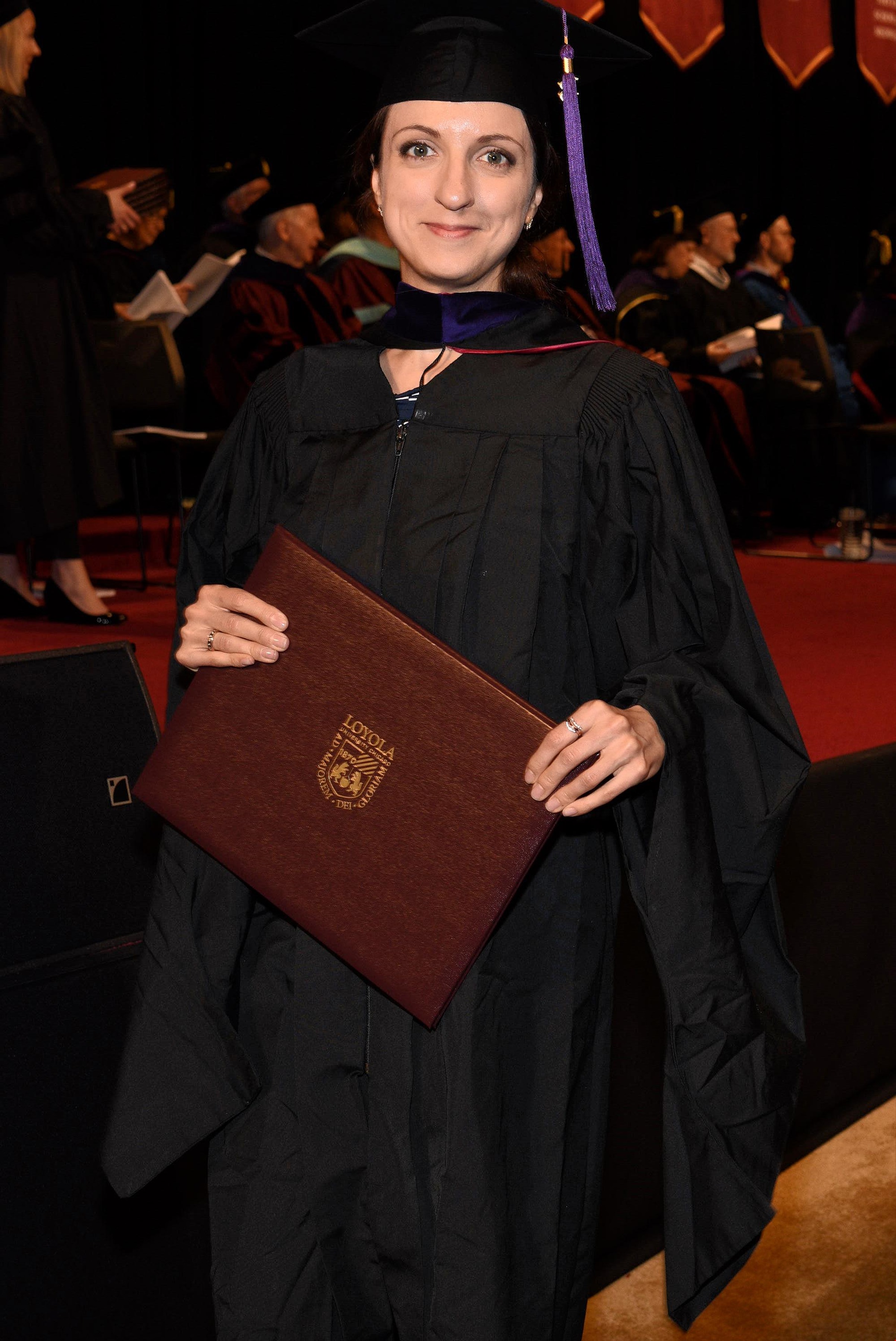
My name is Anastasiia. I was born in Ukraine, where I earned a Master in Computer Science with a specialization in statistics, then went on to complete an MBA with a focus in international economics. I worked in the financial industry, analyzing small businesses at a bank — I wanted the work to actually make a difference for the people on the other end of it, not just produce a report. I ended up automating parts of that work myself, which is when I discovered how much programming could transform the way work actually got done.
I moved to the United States in 2013. The biggest surprise wasn’t the culture
or the language — it was the legal system. I couldn't make sense of my own paperwork. I remember not fully understanding what I was agreeing to just to see a
doctor. So I went back to school, this time to Loyola for a Master of Jurisprudence in
Data Privacy and Security — not to practice law, but to understand, formally, how
data, consent, and legal risk actually connect.
I worked as a financial analyst at a few companies after the move, then decided to
change the scenery entirely and went into e-commerce. That’s where something
clicked. I loved investigating customer behavior — not just what people bought,
but why — and I loved automating the systems around it even more. I built
frequently-bought-together and recommendation models.
The two things I cared about most, understanding people and building
systems that scale that understanding, turned out to be the same job.
As AI capability grew, I leaned into it — not as a pivot, but as the next
version of work I was already doing. Today I build multi-agent AI systems, and the
same questions still drive it: what does this data actually mean, what happens when
the system gets it wrong, and how do I build something people can actually trust.